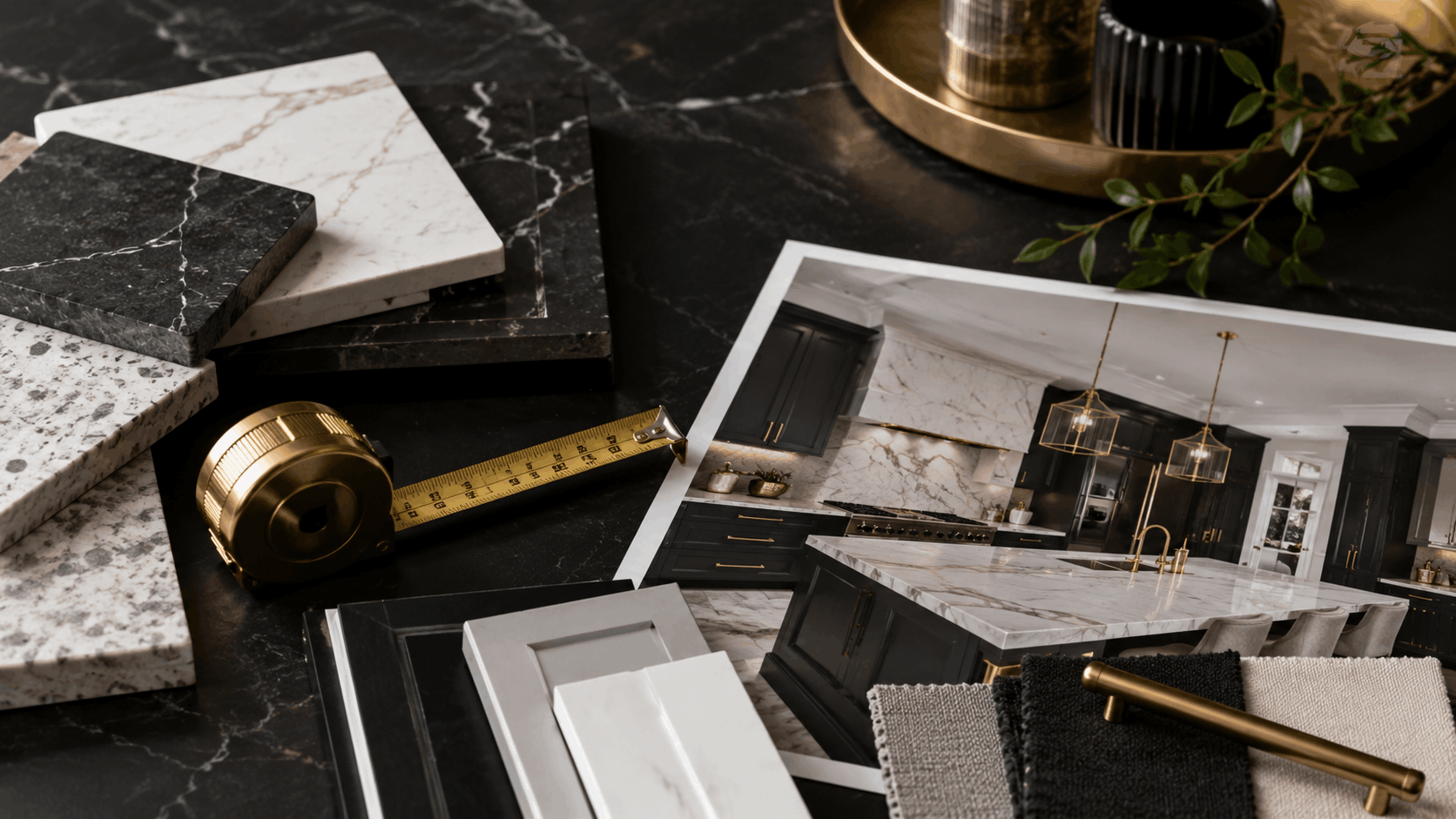
Choosing a countertop can feel simple at first. You see a beautiful slab, imagine it in your kitchen, and think the hard part is done.
But countertops are not just about looks. The wrong choice can lead to extra costs, delayed installation, visible seams, poor durability, and daily frustration after the project is finished.
The good news is that most countertop mistakes are avoidable when you know what to look for before you commit.
Here are 7 costly countertop mistakes people make, and how you can avoid them.
Mistake 01
Choosing Material Based on Looks Alone
A beautiful slab can easily distract you from the practical side of the decision. Marble may look stunning in a showroom, but it may not be the best match for a busy family kitchen. Granite may be tough, but it still needs sealing. Quartz may be low-maintenance, but it is not ideal for outdoor use.
The real question is not just “Which countertop looks best?” The better question is “Which countertop fits the way I actually live?”
- Marble: Elegant and timeless, but more likely to scratch, stain, and etch.
- Granite: Strong and natural, but usually needs periodic sealing.
- Quartz: Consistent, non-porous, and low-maintenance, but sensitive to high heat and direct UV exposure.
- Quartzite: Beautiful and natural, but often confused with quartz even though it has different care requirements.
How to avoid it: Match the countertop material to your lifestyle first, then choose the look. A surface that fits your daily routine will always feel better than one you constantly worry about damaging.
Mistake 02
Ignoring Accurate Measurements
This is one of the most expensive mistakes in countertop projects. A small measurement error can lead to wasted material, wrong cutouts, installation delays, or a slab that simply does not fit.
Countertops need to work around cabinets, walls, sinks, cooktops, faucets, appliances, overhangs, corners, and seams. Even a few millimeters can matter.
- Older homes often have walls that are not perfectly square.
- Sink, cooktop, and faucet cutouts must be measured precisely.
- Cabinet changes can affect the final countertop size.
- DIY measurements can miss small details that matter during fabrication.
How to avoid it: Always have professional measurements taken before fabrication begins. At Fabricxa, measurement is treated as a dedicated project step because accurate planning prevents expensive surprises later.
Mistake 03
Picking the Wrong Edge Profile
Edge profiles are easy to overlook, but they affect both the appearance and the practicality of your countertop.
A sharp, modern edge may look clean, but it may not be ideal in a home with young children. A decorative edge can look elegant, but it may increase fabrication cost. A waterfall edge can be beautiful, but it needs careful planning and a higher budget.
- Eased edge: Clean and modern, but sharp corners can be more vulnerable to chips.
- Bullnose edge: Rounded, classic, and safer for family homes.
- Ogee edge: Decorative and elegant, but usually more expensive.
- Waterfall edge: A premium statement for islands, but it requires more material and planning.
How to avoid it: Choose an edge profile based on your design style, household use, and budget. Ask to see physical samples because photos do not always show how the edge will feel and look in real life.
Mistake 04
Overlooking Seam Placement
Seams are sometimes necessary, especially on large islands, long countertop runs, or layouts that require multiple slabs. The problem is not the seam itself. The problem is poor seam placement.
A badly placed seam can interrupt the design, make veining look broken, or create a weaker area near a sink or high-use section.
- Seams near sinks can be exposed to more moisture and stress.
- Seams through strong veining can look very noticeable.
- Poor layout planning can make seams more visible than they need to be.
- Some installers place seams where it is easiest for them, not where it looks best for you.
How to avoid it: Review the layout plan before fabrication begins. A good countertop team should explain where seams will go and why. With Fabricxa, layout planning is part of the process so you know what to expect before anything is cut.
Mistake 05
Underestimating the Total Cost
Many homeowners budget for the slab and forget the rest of the project. That is where sticker shock happens.
A countertop project usually includes more than the material itself. Fabrication, installation, cutouts, edges, removal, backsplash details, sealing, and delivery can all affect the final price.
- Material: Stone type, slab rarity, color, pattern, and thickness all affect price.
- Fabrication: Cutting, shaping, polishing, and edge profiles add to the cost.
- Installation: Labor, removal of old countertops, leveling, and adjustments matter.
- Extras: Sink cutouts, faucet holes, backsplash cuts, sealing, and special details may increase the total.
How to avoid it: Ask for a clear estimate that includes the full scope, not just the slab price. Fabricxa focuses on transparent estimates so you understand what is included before the project moves forward.
Mistake 06
Buying From One Place and Installing From Another
This can seem like a smart way to save money. You find a slab from one supplier, hire another installer, and hope everything works smoothly.
But when multiple parties are involved without clear project ownership, problems become harder to solve.
- The installer may not warranty work done with someone else’s material.
- The supplier and installer may not coordinate properly on dimensions or cutouts.
- If something goes wrong, each side may blame the other.
- You may end up managing details that should have been handled professionally.
How to avoid it: Work with a provider who manages the full process from material guidance to fabrication and installation coordination. When one team owns the process, communication is clearer and accountability is easier.
Mistake 07
Rushing the Decision
Countertops are a long-term investment. You will see and use them every day, often for many years. Choosing too quickly because of a sale, deadline, or pressure from someone else can lead to regret.
A countertop may look different under showroom lights than it does in your kitchen. A small sample may not show the full movement of the slab. A color that looks beautiful alone may clash with your cabinets, flooring, or backsplash.
- See the slab or sample in person whenever possible.
- Bring a cabinet door, flooring sample, or paint swatch when choosing material.
- Compare at least two options before making a final decision.
- Ask about maintenance before choosing based on appearance.
How to avoid it: Slow down and choose with context. A few extra days of planning can save you years of frustration.
Quick Checklist Before You Choose a Countertop
- Does the material match your lifestyle and cooking habits?
- Have professional measurements been taken?
- Do you understand the full cost, not just the slab price?
- Have you reviewed the edge profile and seam placement?
- Do you know how much maintenance the material requires?
- Is one team managing the process from planning to installation?
The Bottom Line
Most countertop regrets come from three things: not enough information, not enough planning, and not the right team guiding the project.
Do not choose based on looks alone. Do not guess measurements. Do not ignore seams, edge profiles, maintenance, or total cost.
Your countertop is something you will see, touch, clean, cook on, and live with every day. When you plan it properly, the finished result feels better, lasts longer, and gives you more confidence in the money you spent.
Planning a Countertop Project?
Fabricxa can help you compare materials, understand your options, and plan your countertop project before costly mistakes happen.
Use the button above to Get an estimate without any comitment, or explore available styles through Browse our inventory.
If this guide helped you avoid a costly mistake, share it with someone who is planning a kitchen, bathroom, or countertop project.